
Master Dent Clinic
Our dental partner in Istanbul — fifteen years, more than forty thousand patients, and eight departments under one roof: implants and oral surgery, crowns and veneers, root canals, gum treatment, children’s dentistry and its own 3D imaging. Your case is reviewed, planned, costed and followed up through MedVoyage Global.
A Whole Dental Hospital in Four Floors
Istanbul has no shortage of dental clinics selling to foreign patients. Most of them are one surgery and a marketing budget, and everything outside their one procedure gets referred somewhere else — which for a patient who has flown in means another building, another appointment and another day gone.
Master Dent is built the other way round: eight departments, its own radiology, and fifteen years of treating a local population that can go anywhere it likes. That last part matters more than any brochure claim.
The Imaging Is In the Building
Master Dent runs its own dental radiology department — RVG digital periapical imaging, panoramic X-rays, cephalometric films and 3D jaw and dental tomography. That matters more than it sounds. Implant planning is impossible without knowing the shape and depth of the bone, and a patient who has flown in should not lose a day being sent across Istanbul to an imaging centre and back.
Implants and the Teeth That Go On Them, Same Roof
In most cities the surgeon who places the implant and the prosthodontist who builds the tooth on top of it work in different practices, and the patient becomes the courier between them. Here the surgical department and the prosthetic department sit in the same building, working from the same records — which is what makes a staged implant case survive contact with a travel schedule.
A Department for Each Part of the Problem
Eight named departments rather than one general list: aesthetic dentistry, oral and maxillofacial surgery, prosthetics, endodontics, periodontology, paediatric dentistry, radiology and special treatments. A worn front tooth is rarely just a worn front tooth, and a clinic split this way can treat the cause instead of the symptom that happens to be visible.
Arranged and Followed Up Through Us
You are not negotiating a treatment plan with a clinic in another country, in a language you may not share, by message. MedVoyage Global reviews the case, moves the records, holds the written plan, books the appointments and stays with you after you fly home.
Eight Departments, Named
The clinic’s own structure, with the procedures each department performs. If what you need is not listed, describe the problem anyway — a great deal of dentistry sits under a heading no patient would think to look under.
Aesthetic Dentistry
Appearance-led work, planned around what the teeth underneath can actually support.
- Digital smile design — the result modelled before anything is cut
- Hollywood smile — full aesthetic makeover across the visible arch
- Adhesive bonding
- Teeth whitening
- Aesthetic composite fillings
- Tooth crystals
Oral & Maxillofacial Surgery — Implants
Titanium roots placed into the jaw, so that replacing one tooth does not mean cutting the two beside it.
- Titanium dental implants
- Single-stage placement — temporary abutment fitted at surgery
- Two-stage placement — implant covered by gum to heal, abutment fitted later
- Zirconium implants, used where the jawbone is narrow
- Temporary bridge worn through the healing period
- Prosthetic abutments and crowns once the implant has integrated
Prosthetic Dentistry
Rebuilding and replacing teeth that are broken, worn down or already gone.
- Complete dentures, upper and lower
- Crowns and bridges
- Zirconium crowns
- E-max porcelain
- Porcelain laminate veneers
- Inlay and onlay restorations
Endodontics
Saving a tooth whose nerve has been reached, instead of removing it.
- Root canal treatment under local anaesthetic
- Fibre post placement where too little sound tooth remains
- Root canal retreatment where a previous attempt has failed
- Pulp capping for deep decay, preserving the living tissue
Periodontology — Gum Disease
The foundation work. Nothing built on an untreated gum lasts, however well it is made.
- Scaling — removal of hardened plaque above the gumline
- Curettage — cleaning inflammation from the root surfaces
- Flap surgery
- Frenectomy
- Treatment for receding gums
- Crown lengthening
- Gingivectomy
- Gingivoplasty — reshaping healthy gum tissue
Paediatric Dentistry
Preventive work on baby teeth, which is where most adult dentistry is avoided.
- Fluoride application to strengthen enamel
- Fissure sealants over the grooves of the back teeth
- Pulp amputation on baby teeth with advanced decay, in place of a root canal
Dental Radiology
Imaging on site, so the plan is drawn from evidence rather than assumption.
- RVG digital periapical imaging — root and bone structure of individual teeth
- Panoramic X-ray — cysts, decay and other findings invisible to the eye
- Cephalometric X-ray — skull bone and soft tissue in one film
- 3D jaw and dental tomography — lower radiation dose, more accurate planning
Special Treatments
The problems that do not sit neatly inside any of the other seven departments.
- Halitosis — assessment and treatment of persistent bad breath
- Laser closure of gaps between teeth, with minimal reshaping of the tooth
What You Will Actually Walk Into
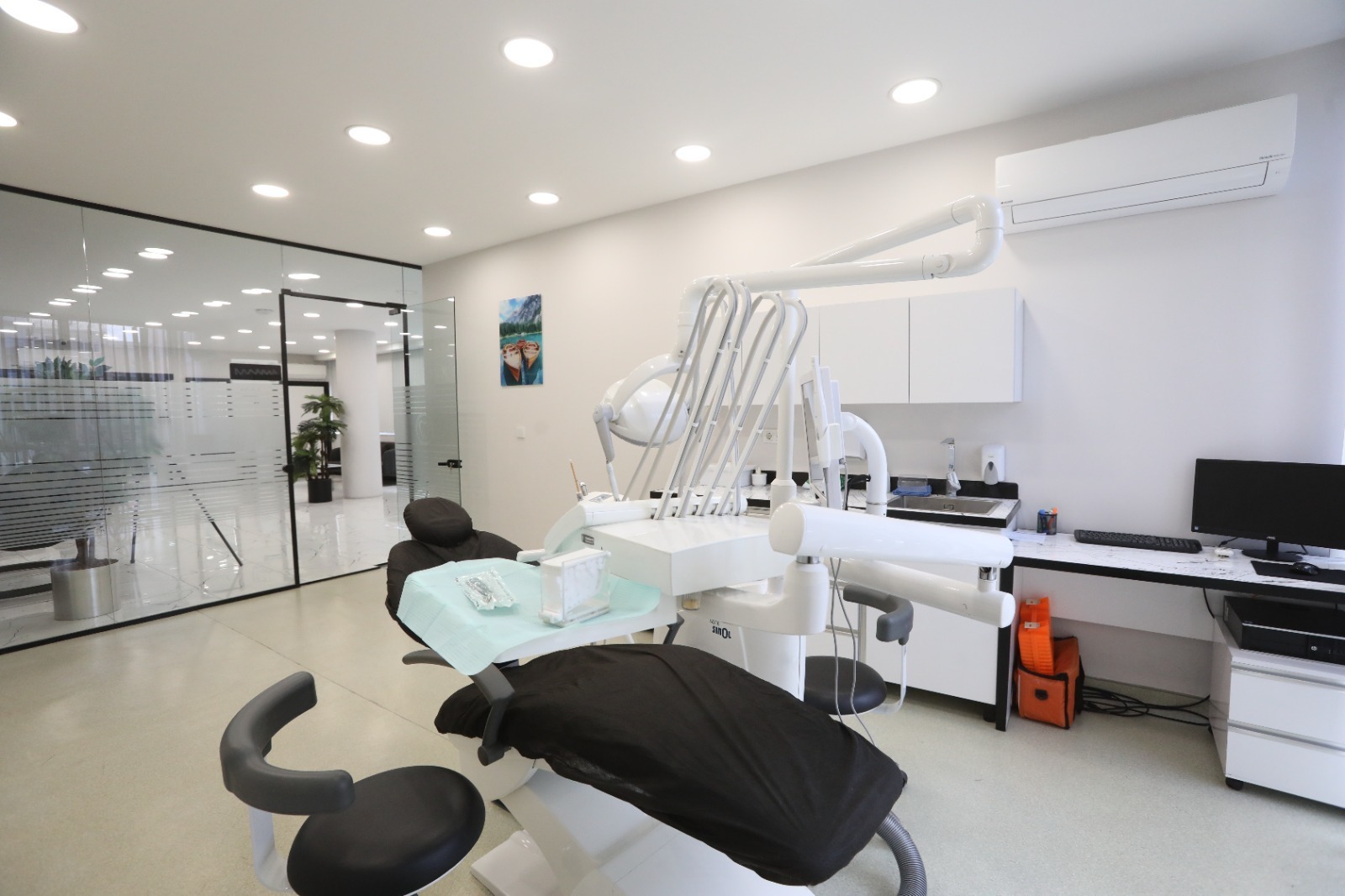
Photographs from the clinic itself — not stock images of a dental surgery in another country. Worth a minute, because “modern facility” is the cheapest sentence in medical tourism.
Chairside monitor at the unit, so images are reviewed with you in the chair rather than described to you afterwards.
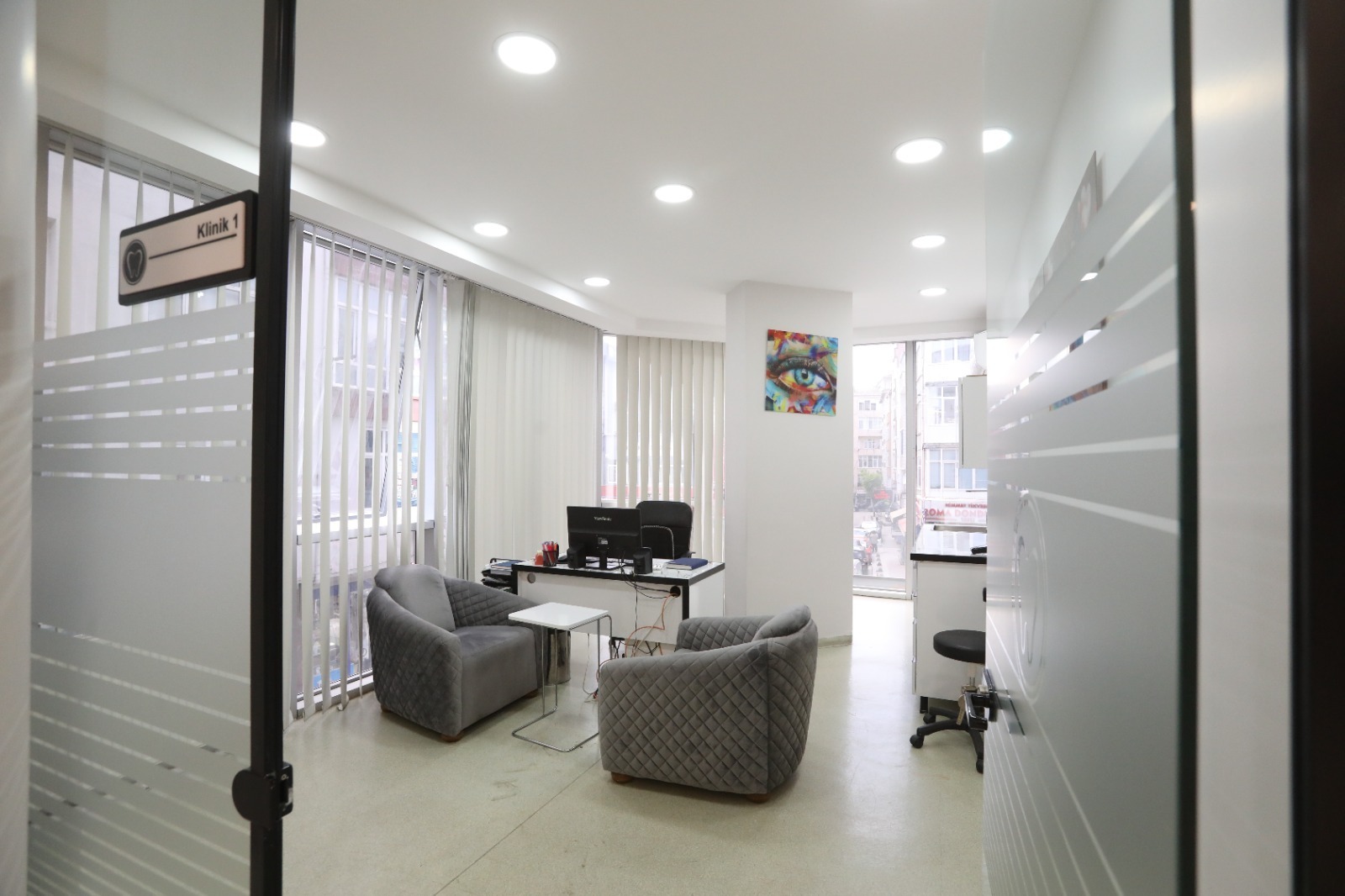
The examination and the conversation about what it found happen in the same room, seated.
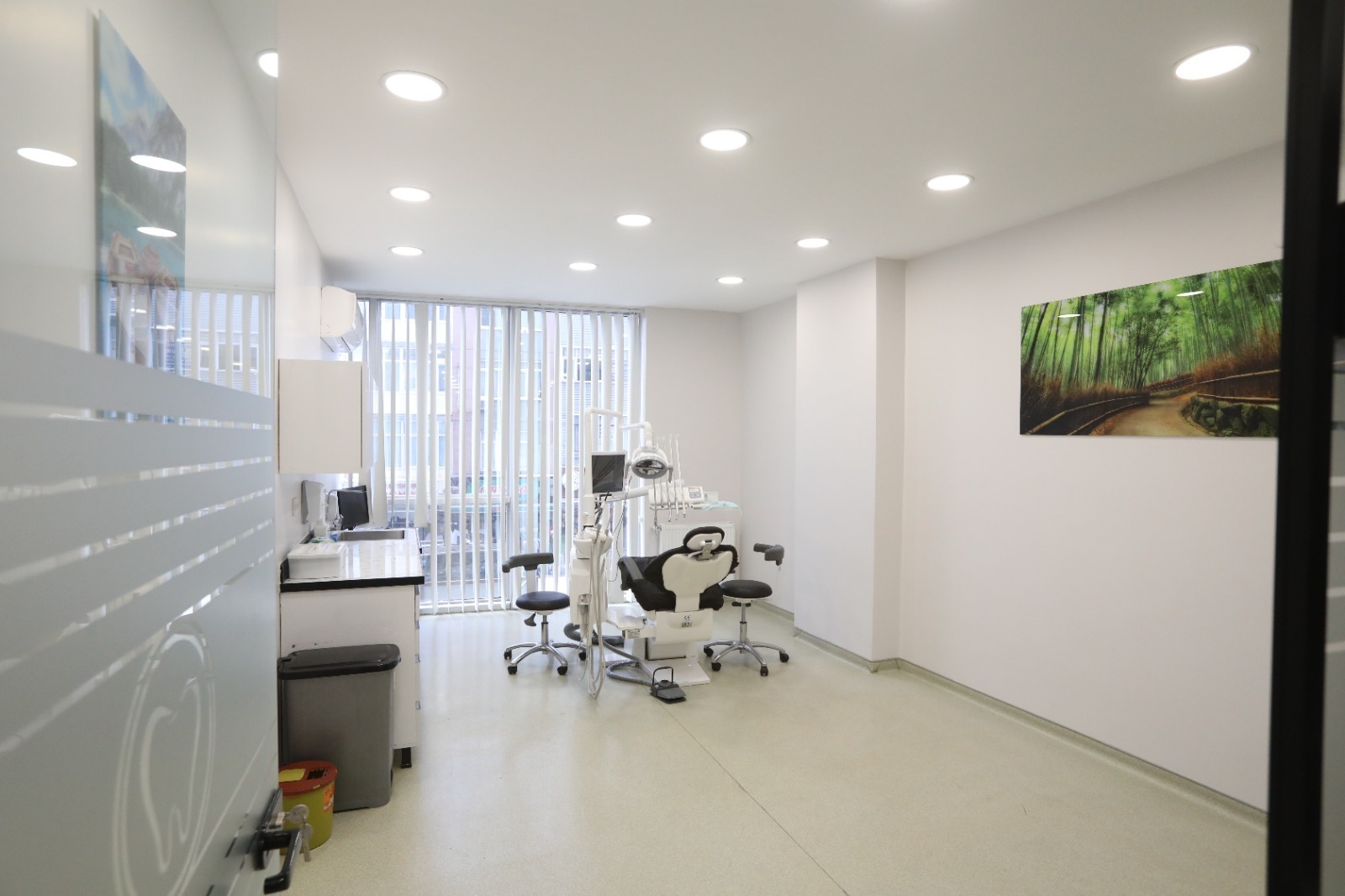
Rooms are separate and enclosed — a staged case can run across more than one department in a day.
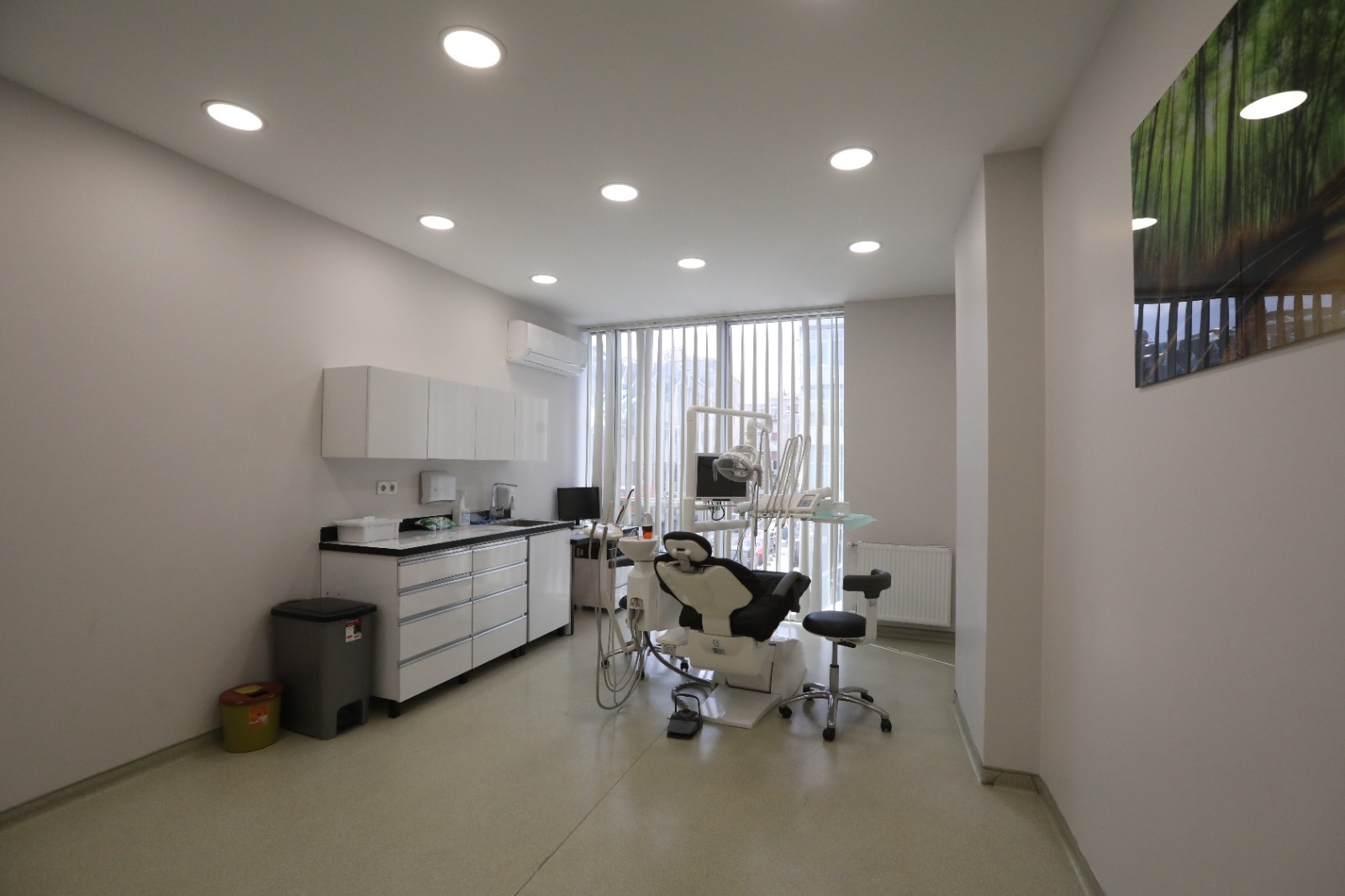
Sealed cabinetry and a dedicated preparation counter beside each unit.
What People Actually Travel For
Four patterns account for most dental cases that cross a border. Yours may be simpler than any of them — which is worth establishing before you plan a trip around it.
Rebuilding an Arch on Implants
Several teeth gone, or a denture that has never sat properly. This is the case that most often crosses a border, because it is the one where the cost difference is largest — and it is also the one that needs 3D imaging before anyone can honestly say what is possible. It is staged: placement, a healing period while the bone fuses to the implant, then the permanent teeth.
A Smile Makeover That Has Been Planned
Veneers, crowns, whitening and bonding across the visible teeth. The part worth insisting on is the design step — seeing the proposed result modelled before enamel is touched, because tooth reduction cannot be undone. Master Dent runs digital smile design as a named part of the aesthetic department, not as an upsell.
Undoing Twenty Years of Patch Repairs
Old fillings failing, a cracked crown, a bridge that has come loose, a bite that has quietly collapsed. Treating these one at a time in short local appointments takes years and rarely addresses the bite itself. A single planned sequence, with the imaging done first, is a different proposition.
Gum Disease Left Too Long
Bleeding, recession, teeth that have started to move. This is unglamorous and it is also the thing that decides whether any of the rest is worth doing — crowns and implants both fail on untreated gums. Periodontology at Master Dent runs from routine scaling through curettage to flap surgery and grafting-adjacent work.
The Case for Treating Your Teeth Here
Dental travel works when the money and the timeline both hold. Here is where each of them stands — including where they do not.
The Cost Gap Is Real, and It Is Not a Quote
Dental work in Turkey commonly lands well below UK, Gulf and Western European private pricing — often enough to cover the flights on a multi-tooth case. That is a range, not a price. What you actually pay depends on how many units of work the examination finds, and you get that figure in writing before you commit to anything.
Istanbul Is a Hub, Which Changes the Maths
Direct flights from most of Europe, the UK, the Gulf, Central Asia and much of Africa. That matters specifically for implant cases, because they need two trips — and a second trip is a very different decision when it is a four-hour direct flight rather than two connections.
Some of It Cannot Be Rushed
Crowns, veneers, whitening, root canals and gum treatment fit inside a single trip. Implants do not. The bone needs roughly three months to fuse in the lower jaw and around six in the upper before the permanent teeth go on. Anyone offering you finished implants in a week is offering you something else.
Volume Is Not the Same as Quality
Turkey does an enormous amount of dental tourism, and that has produced both excellent clinics and some very poor ones. Volume is the reason to be careful, not the reason to relax. We select the clinic and we stay involved in the case — that is the whole point of going through a coordinator rather than a search result.
The Parts That Are Not Dentistry
The clinical work happens at the clinic. Everything around it — the arranging, the translating, the paperwork, the chasing — happens here.
Records and Imaging
Your photographs, existing X-rays and dental history gathered, organised and sent ahead so the first appointment starts from something.
A Written Plan
What is proposed, in what order, over how many visits, and an indicative cost — in writing, in English, before anything is booked.
Appointments and Trip Shape
Dates set around the clinical sequence rather than the other way round, including where a case has to be split across two trips.
Aftercare and Follow-Up
Written aftercare before you leave, and a coordinator who still has your file if something needs raising once you are home.
Four Steps, One Coordinator
You speak to your MedVoyage Global coordinator; we speak to the clinic. The plan and the cost arrive in writing before anything is booked.
Send the Case
Photographs of the teeth, any X-rays you already have, and a description of what is wrong in your own words. No forms to decode.
The Clinic Reviews It
A clinician at Master Dent looks at what you sent and says what is likely, what is uncertain, and what can only be settled by an examination and a scan.
Plan and Indicative Cost
You receive the proposed sequence, the number of visits, the time on the ground and a cost range, in writing, before you book a flight.
Travel, Treat, Follow Up
Appointments confirmed, the trip shaped around the treatment, and your coordinator still holding the file after you fly home.
What This Is, and Is Not
Turkish dental tourism attracts more overselling than almost anything else in medicine. Here is where the boundaries sit, before you spend any more time on this.
Photographs Are Not a Diagnosis
A remote review narrows the possibilities and rules things out. It cannot measure bone, test a nerve or find decay under an existing crown. The plan that matters is the one written after the examination and the scan.
A Range Is Not a Price
Any figure given before an examination is an estimate of a category of work, not a quotation for your mouth. The costed plan comes after the clinician has looked, and it comes in writing.
Tooth Reduction Cannot Be Reversed
Veneers and crowns require enamel to be removed, and enamel does not grow back. That is a permanent commitment to maintaining restorations for the rest of your life. It is worth doing knowingly, which is why the design step exists.
Implants Run on Biology, Not on Calendars
Bone fuses to titanium at its own pace — around three months in the lower jaw, around six in the upper. A trip can be planned around that. It cannot be shortened by paying more.
Not Everyone Is a Candidate
Implants need a completed jaw, adequate bone, controlled diabetes and, where blood thinners are involved, a medical decision before surgery. Where the answer is no, or not yet, you will be told that rather than sold around it.
We Are the Route, and We Stay the Route
Every enquiry, booking, plan and follow-up for Master Dent Clinic runs through MedVoyage Global. One file, one coordinator, one place to raise a problem — including after you are home.
Before You Book Anything
The things patients ask most often about dental treatment in Istanbul. If yours is not here, ask it directly — most of the useful answers depend on what an examination and a scan actually find.
It depends entirely on what is being done. Whitening, fillings, scaling and most single-tooth work fit into a short stay. Crowns, veneers and a full smile design usually need somewhere between five days and two weeks, because the laboratory work sits between the preparation appointment and the fitting. Implants are the exception — they need two trips. You get the actual number of days in your written plan, before you book anything.
No, and you should be wary of anyone who says otherwise. The implant is a titanium root placed into the jaw, and the bone has to grow onto it before it can carry a tooth — roughly three months in the lower jaw and around six in the upper. What you can have immediately is a temporary bridge, so you are not walking around with a gap in the meantime. The permanent teeth go on at the second visit. In some cases the clinic can fit the new teeth sooner, but that is a decision made from the scan, not from a brochure.
Dental treatment in Turkey generally sits well below UK, Gulf and Western European private pricing, and on a multi-tooth case the difference is often larger than the cost of getting there. That is as far as an honest answer goes without an examination, because the price is driven by how many units of work are actually needed — and a mouth that needs eight crowns and a mouth that needs two look very similar in a photograph. Send the case and you will get a written, itemised estimate rather than a headline figure.
For implant planning, yes. A flat X-ray shows you height but not width, and an implant placed without knowing the width of the bone is a gamble. Master Dent runs 3D jaw and dental tomography on site, which also means a lower radiation dose than older imaging and a plan drawn from the actual anatomy. If you already have recent imaging from home, send it — it may reduce what needs repeating.
Not automatically. Zirconium implants are a newer generation designed to add strength, and the clinic uses them particularly where the jawbone is narrow. Outside of that, the clinic itself describes the difference as one of durability in specific situations rather than a general upgrade. Which one suits you is a decision that follows the scan — it is not something to choose from a website.
Your case is handled in English by your MedVoyage Global coordinator from the first message onward — the written plan, the costs and the aftercare instructions all reach you in English. Where a consultation needs interpretation on the day, that is arranged as part of the coordination rather than left to chance at the appointment.
You contact your MedVoyage Global coordinator, not a switchboard in another time zone. We hold the treatment record, we raise it with the clinic, and we tell you plainly whether it is something to manage locally or something that needs to be revisited. Aftercare instructions and review timings are given to you in writing before you leave.
Yes — the clinic has a paediatric department, and its work is mostly preventive: fluoride application, fissure sealants over the grooves of the back teeth, and pulp amputation where a baby tooth has decayed too far for a filling. If you are travelling for your own treatment, having children examined in the same window is usually straightforward to arrange.
It changes the order, and it is important. Crowns, veneers and implants all fail on untreated gums, so periodontal treatment comes first — scaling, curettage, and flap surgery where the disease has gone deeper. That may add a stage to the plan. It is not a delay, it is what makes the rest of the work last.
Send the Case, Get a Real Plan
Photographs of the teeth, any X-rays you already have, and a description of the problem. A clinician at Master Dent reviews it and you get back a written plan — what is proposed, in what order, over how many visits, how many days on the ground and roughly what it costs — before you book a flight.
All enquiries, bookings and follow-up for Master Dent Clinic are handled by MedVoyage Global. Nothing on this page is medical advice, a diagnosis, a quotation or a promise of a particular outcome. Treatment decisions are made by the treating clinician after an examination.